Professional Development Events & Workshops

If you have a professional development workshop or conference that you would like to share, please submit it online Registration / login is required.

Barriers within the LGBTQIA+ Community: Advocating for Runaway and Homeless Youth

This training will support providers in understanding the impacts of violence on the LGBTQ+ community and ways in which you can show up as a more impactful and LGBTQ+ affirming provider, and will support providers in increasing their care and services for runaway and homeless youth.

Recovery Slogans in Treatment

Recovery Slogans offer inspiration and guidance in the recovery process. Participants will examine the efficacy of slogans and how to incorporate these in treatment. Slogans are often associated with SUD treatment, however, they are applicable in other forms of treatment and recovery from various issues.

Community Care of Consortium Meeting

The conversation will focus on priorities, initiatives, and opportunities impacting families. Participants will have the opportunity to engage in dialogue around current challenges, emerging needs, and strategies to strengthen supports for children, youth, and families statewide. 

Opioid Overdose: Risk, Response and Reduction

Despite a decrease in opioid overdose deaths, this remains a significant problem. Participants will examine risk factors associated with opioid-related harms including overdose.  Participants will also review the signs of an overdose and the critical response to one. This course provides an overview of the Overdose Prevention Act, MOUD & diversion. 

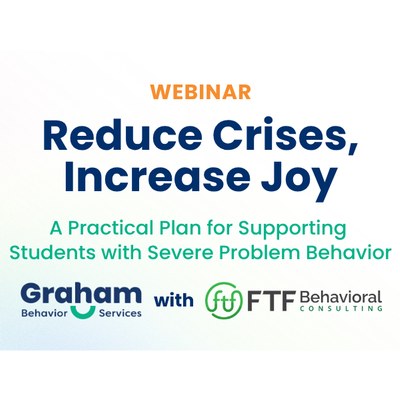
Increasing Safety, Dignity, and Joy Across the Day: Universal Protocols

Join Graham Behavior Services and FTF Behavior Consulting for Universal Protocols training: Reduce Crises, Increase Joy. Learn actionable strategies to create Happy, Relaxed, and Engaged (HRE) environments for students with severe problem behavior. 

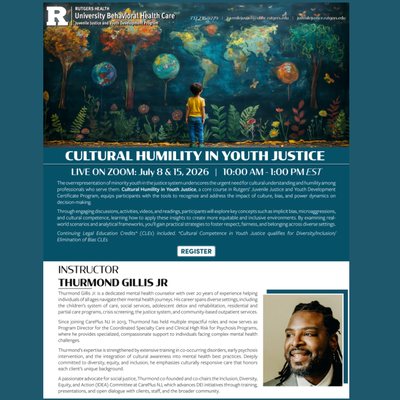
LGBTQ+ Health Disparities

This workshop addresses the social, mental, physical, and sexual health trends experienced by LGBTQ+ youth, adolescents, and adults.


Ongoing Opportunities

Making Educators Partners in Youth Suicide Prevention

SPTS helps educators understand this important role with an acclaimed online training program that is self-paced, comprehensive and offered free of charge. Through the use of role-plays, the training embraces school culture and presents real-life scenarios for youth suicide prevention methods. This program is offered online and in-person.

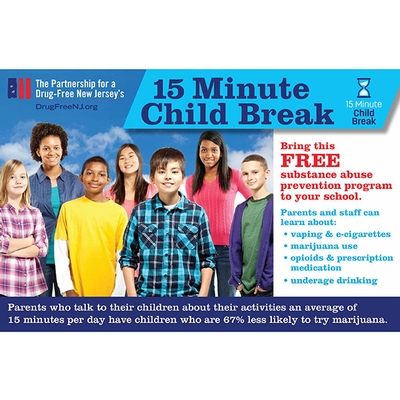
Child Break Video - Substance Use Prevention

A free substance use prevention video is available for you to share with your community! The Child Break is an interactive, multimedia webinar that will inform, encourage, and empower parents, educators, and caregivers to effectively communicate with children about the dangers of drugs and alcohol.

Monmouth University Continuing Education for Social Workers

The Professional Education Program (PEP) offers high-quality continuing education for social workers. Our CE* granting workshops cover a wide range of topic areas, including Clinical, Social and Cultural Competence, Ethics, Prescription Opioids, and Clinical Supervision.

Trauma-informed Yoga Teacher Training

Sakala School of Integrative Teaching is dedicated to providing healthcare and education professionals with evidence-informed integrated training approaches that promote health, growth, and well-being.

Columbia-Suicide Severity Rating Scale Training

Suicide Prevention for Educators
This workshop will review suicide prevention data, myths, the development of the tools, administration covering items that are predictive of increased risk, and the impact the Columbia Protocol is having across the globe.

Victim Assistance Training Online

VAT Online is a foundational Web-based victim assistance training program that offers victim service providers and allied professionals the opportunity to acquire the essential skills and knowledge they need to more effectively assist victims of crime. 

Youth Mental Health First Aid

This 6-hour training gives adults who work with youth the skills they need to reach out and provide initial support to children and adolescents (ages 6-18) who may be developing a mental health or substance use problem and help connect them to the appropriate care.